Where Mountains Touch Silence: Trekking Torres del Paine
Navigating the roaring winds of the southern steppe and discovering the pristine quietude of Patagonian glacial moraines.
Contents
The wind in Patagonia is not a meteorological occurrence; it is a physical entity with an undeniable will. It whips over the Southern Patagonian Ice Field, funnels down glacial canyons at ninety kilometers per hour, and bends stunted lenga beech forests into permanent kneeling postures.
1. The Voice of the Steppe
Stepping out onto the trails of the Paine massif demands humility. In exchange for turbulent gusts, the environment offers an unparalleled optical clarity: turquoise meltwater lakes fed by Glacier Grey, soaring Andean condors riding thermal updrafts, and skies scrubbed raw by Antarctic fronts.
2. Geology in Two Colors
The iconic Cuernos del Paine present a staggering dual-tone geological formation. Dark sedimentary Cretaceous rocks form the upper peaks, resting dramatically above pale plutonic granite laccoliths pushed upward twelve million years ago. Standing beneath them, human notions of time dissolve.
"In these valleys, mountains do not belong to maps; maps are merely polite apologies for our inability to grasp wilderness."
3. Backcountry Stewardship
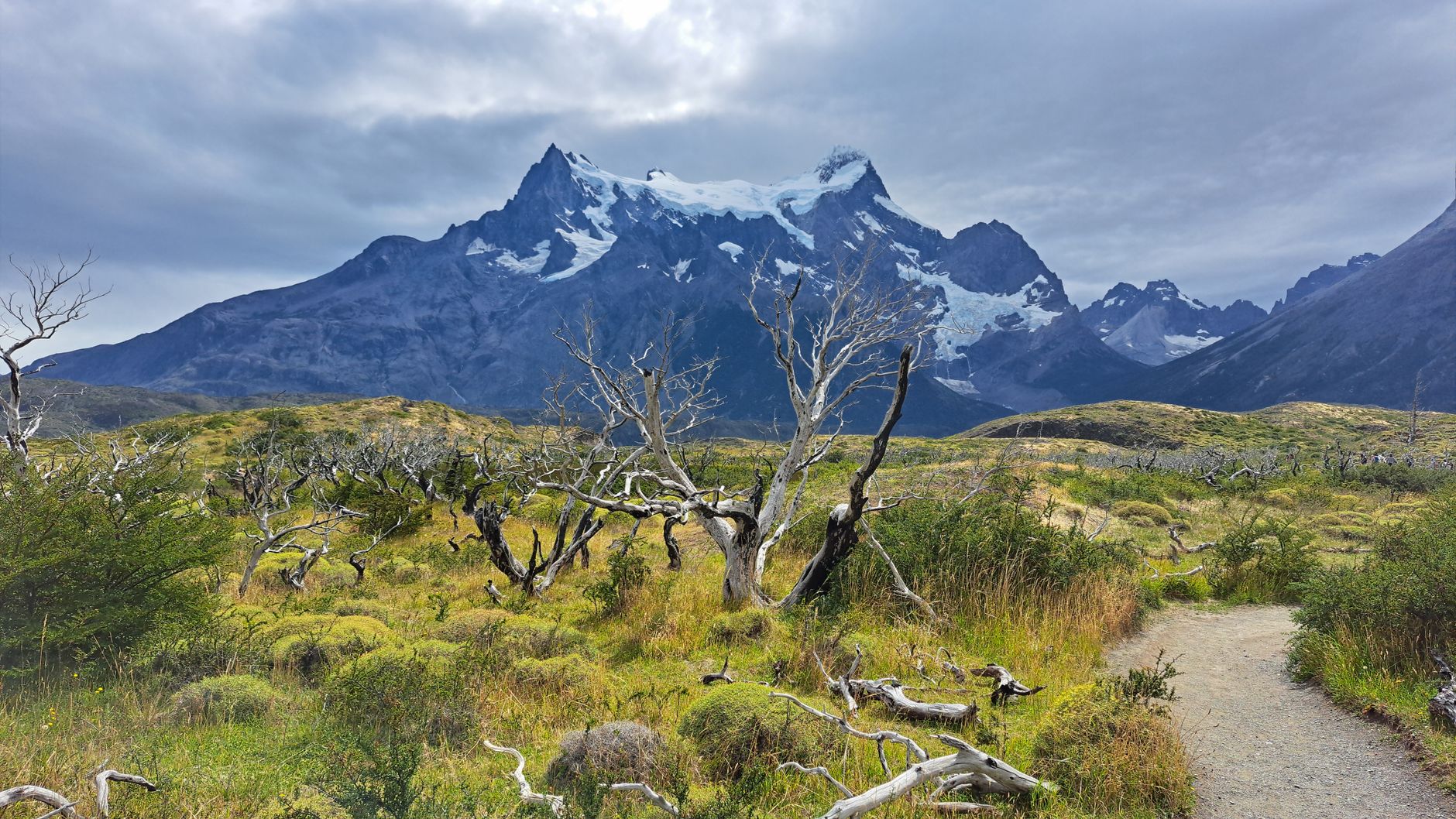
Torres del Paine has suffered from historical fires ignited by careless camp stoves. Strict conservation measures now govern the park: camping is restricted to designated sectors, fires of any type are prohibited in the backcountry, and all packaging must be packed out to Puerto Natales.
4. Essential Gear Discipline
Pack merino wool base layers, windproof hard-shell protection, high-ankle support footwear, and robust UV filtering lenses. Weather shifts within twenty minutes from balmy sun to driving sleet.
Planning a Patagonian Traverse?
Review our field checklist and low-impact eco-camp booking guidelines.